
Here is a number that is hard to picture. The United States owes roughly $40 trillion.
That is a 4 followed by 13 zeros. If you spent a million dollars every day, you would need over 100,000 years to spend it all.
So how big is the national debt, really? And why should you care? Let’s break it down in plain English.
How Big Is the National Debt Right Now?
In 2026, the total U.S. national debt passed the $40 trillion mark. It keeps rising every single day.
Split evenly, that works out to roughly $118,000 for every person in the country. That includes every child and every retiree.
You can watch the official number grow on the Treasury Department’s “Debt to the Penny” website. Fair warning: it is not relaxing to watch.
How Did America Get Here?
The debt did not appear overnight. Both political parties helped build it, one budget at a time.
When the government spends more than it collects in taxes, it borrows the difference. That yearly gap is called the deficit. The debt is all those deficits added together.
Wars, tax cuts, stimulus checks, bank bailouts, and pandemic spending all added to the pile. So did rising costs for programs like Social Security and Medicare as the population ages.
Here is the uncomfortable truth. Washington has run a deficit in almost every year for more than half a century.
The Interest Bill Is the Real Shock
Like any borrower, the government must pay interest. And that bill is now enormous.
In fiscal year 2026, interest on the debt passed $1 trillion for the first time. It reached about $1.05 trillion, according to the Peter G. Peterson Foundation.
That is roughly $2.9 billion every single day. It is money that buys no roads, no schools, and no soldiers.
Interest is now the third-largest item in the federal budget. Only Social Security and Medicare cost more.
It gets worse. The Congressional Budget Office projects that yearly interest costs will reach about $2.1 trillion by 2036.
Why the National Debt Matters to You
You might think this is Washington’s problem. But a growing debt can reach into your wallet in several ways.
- Higher interest rates. Heavy government borrowing can push up rates on mortgages, car loans, and credit cards.
- Less money for services. Every dollar spent on interest is a dollar not spent on things you actually use.
- Pressure on Social Security and Medicare. These programs face funding gaps, and the debt limits Washington’s options.
- Future taxes. Someone will eventually pay the bill. That could be you, your children, or your grandchildren.
- Weaker global standing. Investors around the world are watching. A loss of confidence could shake the dollar itself.
Can America Actually Go Bankrupt?
This is the big question. The answer is complicated.
The United States borrows in its own currency. In theory, it can always create more dollars to pay its bills.
But printing money is not free. It can fuel inflation and quietly shrink your savings. Many economists warn that the real danger is not a sudden collapse. It is a slow squeeze on living standards.
Others believe the risk is overblown. They point out that America has carried big debts before and recovered. You will hear both arguments, so it pays to understand the facts yourself.
What Could Be Done?
There are only a few levers. Washington can spend less, collect more, or grow the economy faster than the debt.
Each option is politically painful. That is why leaders from both parties keep kicking the can down the road.
Get the Full Story
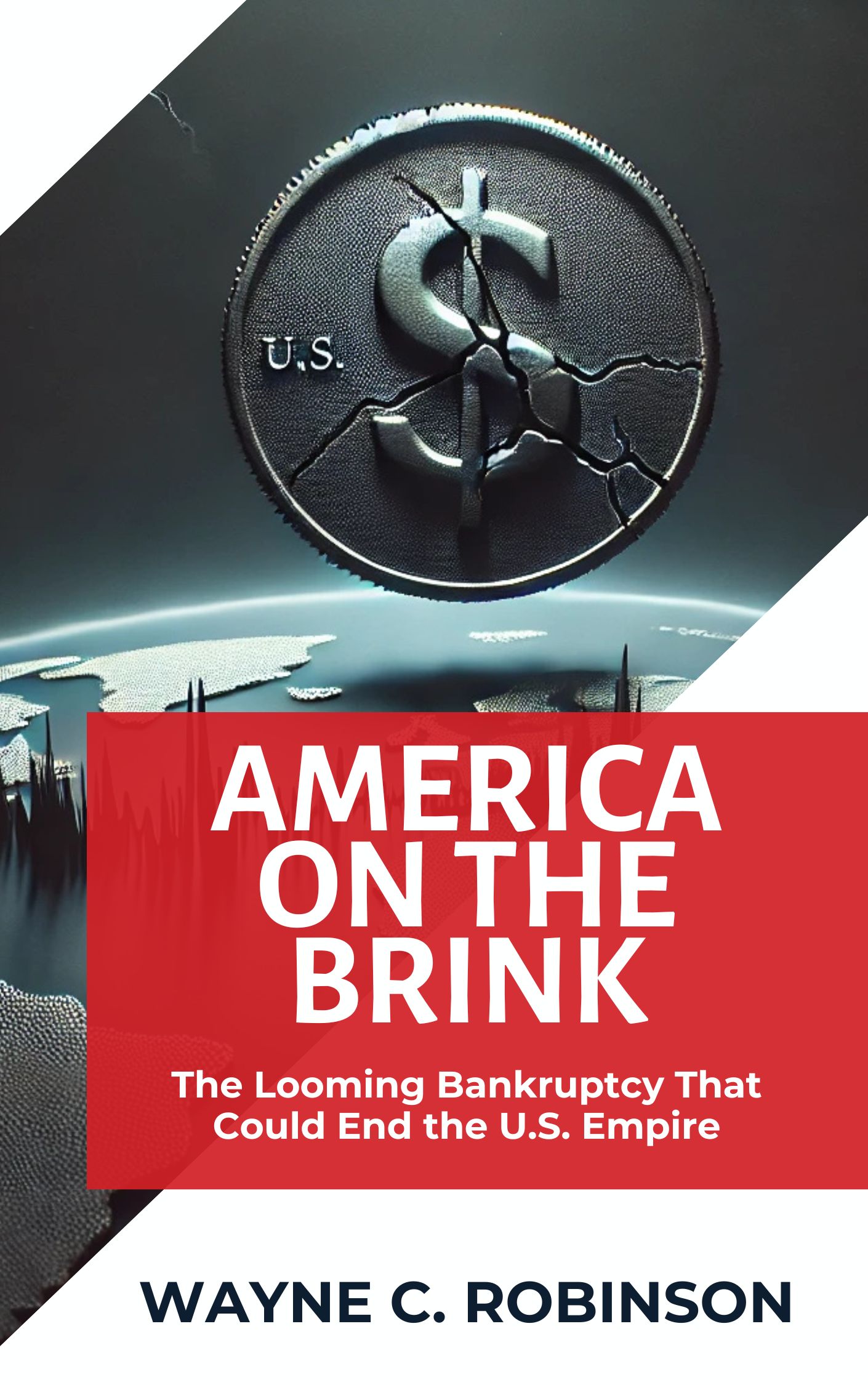
My book, America on the Brink: The Looming Bankruptcy That Could End the U.S. Empire, digs deeper. It explains how the debt grew, who benefits, and what it could mean for your future.
Get the eBook now. It is an instant PDF download, delivered right after purchase.