
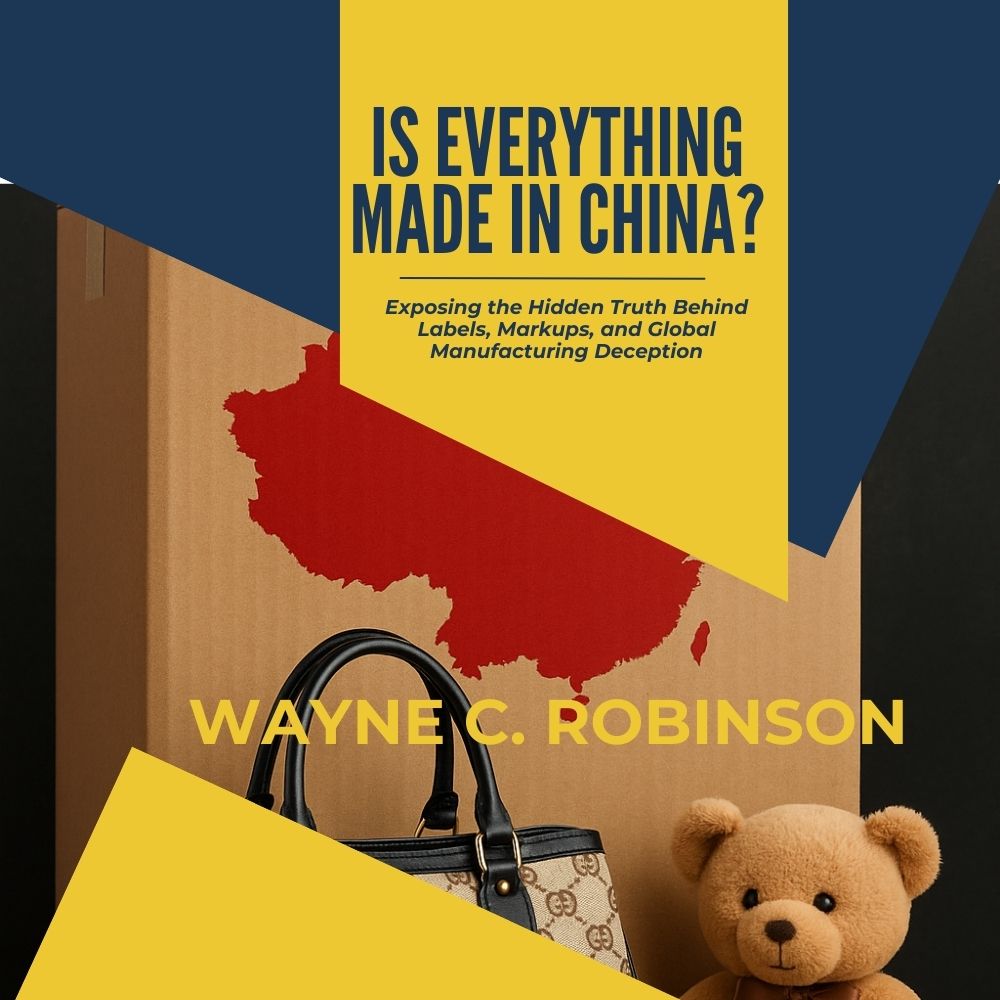
Try a quick experiment. Pick up your phone, your coffee mug, or your kid’s favorite toy. Now flip it over and read the label.
Chances are good it says “Made in China.” It can feel like everything you own came from the same place.
So is everything made in China? Not quite. But the real story is more surprising than the label lets on.
Is Everything Made in China?
No, but a huge share of it is. China is the world’s largest manufacturer by a wide margin.
According to World Bank data, China produces about 28 percent of all the world’s manufacturing value. The United States is second, at about 17 percent.
Twenty years ago, those numbers looked very different. China’s manufacturing output has grown from about $625 billion in 2004 to nearly $5 trillion today.
That is why the label shows up everywhere you look. China dominates electronics, toys, furniture, solar panels, and electric vehicles.
How Did China Become the World’s Factory?
It started in the late 1970s. China opened its economy to foreign companies and offered something they loved: cheap labor.
Western brands rushed in. They could build products in China for a fraction of the cost back home.
China joined the World Trade Organization in 2001. After that, the floodgates opened. Factories, roads, and ports grew at a speed the world had never seen.
Meanwhile, many American factory towns watched their jobs move overseas. That trade-off still shapes politics today.
The Label Does Not Always Tell the Whole Truth
Here is where things get interesting. A “Made in” label does not always mean what you think.
Under trade rules, a product’s country of origin is usually where it went through its last major change. Lawyers call it “substantial transformation.”
So a product can be mostly built in one country and finished in another. The label may only show the final stop.
That is how some goods carry a proud European or American label, even though many parts came from Asia. It is often legal. But it is not always the full picture.
The reverse is true too. An iPhone says “Assembled in China,” but it was designed in California. Its parts come from many countries.
Why This Matters to You
You might shrug and say a label is just a label. But it affects your wallet and your country in real ways.
- Price markups. You may pay luxury prices for products made cheaply overseas.
- Product safety. Quality control varies a lot from factory to factory.
- American jobs. Every product made abroad is a job not done at home.
- Supply chain risk. The pandemic showed how fast shelves empty when one country slows down.
- National security. Relying on a rival for medicine, chips, and defense parts is a serious concern.
Is America Bringing Manufacturing Back?
Leaders from both parties now talk about “reshoring.” That means bringing factories back to the United States.
Tariffs, tax credits, and new chip plants are all part of the push. Some industries are returning.
But change is slow. One industry index still showed reshoring falling short in 2025, despite new tariffs. Rebuilding factories and training workers takes years, not months.
How to Shop Smarter
You do not need to boycott China to be a smarter shopper. Start with a few simple habits.
- Read labels, and look for “Assembled in” versus “Made in.”
- Check a brand’s website for where its products are actually made.
- Ask whether a high price matches real quality and real origin.
- Support local makers when it fits your budget.
Uncover the Hidden Truths
My book, Is Everything Made in China? Exposing the Hidden Truths, goes behind the labels. It reveals how global brands, markups, and trade rules shape what you buy and what you pay.
Get the eBook now. It is an instant PDF download, delivered right after purchase.