
You pay the rent alone. You buy the groceries alone. You handle the fevers, the homework, and the 2 a.m. nightmares alone.
Being a single mom is a full-time job on top of your full-time job. And somewhere along the way, you probably stopped asking for help because there was nobody to ask.
But what if you did not have to do it alone? What if two or three single moms shared one home, one budget, and one village?
The Real Cost of Doing It Alone
Single parenting is expensive. One paycheck has to cover rent, utilities, food, transportation, and childcare.
In many cities, childcare alone can cost as much as rent. When one income has to carry both, there is almost nothing left over. No savings. No cushion. No break.
And the money is only half the story.
The Loneliness Nobody Talks About
Many single mothers say the hardest part is not the bills. It is the isolation.
No one to watch the kids while you run to the store. No adult to talk to at the end of a long day. No one to tell you that you are doing a good job.
Parenting without help wears down your patience, your health, and your hope. You were never meant to carry it all by yourself.
Bring Back the Village
For most of human history, children were raised by a village. Grandmothers, aunts, neighbors, and friends all pitched in.
Modern life split that village into separate apartments. The Single Mothers’ Village model puts it back together.
Here is the idea. Two or three single mothers share a home. They split the rent and the bills. They take turns with childcare, cooking, and errands. Each mom stays fully responsible for her own children, but nobody is alone anymore.
The benefits add up fast:
- Lower rent and utility bills for everyone
- Shared childcare, so you can work, study, or rest
- Home-cooked meals without cooking every night
- Adult support and friendship under the same roof
- More role models and playmates for your kids
How to Build Your Own Village
This only works if you set it up the right way. Good intentions are not enough. You need a plan.
The book walks you through each step. First, find the right partners. Look for moms whose values, schedules, and parenting styles fit with yours. Then use a careful matching process before anyone signs a lease.
Next, choose a home that gives every family some private space. Finally, put everything in writing with a household agreement. It should cover:
- How rent and bills are split
- The childcare rotation
- Cooking and cleaning schedules
- House rules for guests and dating
- How you will settle disagreements
- What happens if someone needs to move out
A written agreement might feel awkward at first. But it prevents the arguments that ruin friendships later.
But What About the Problems?
Fair question. Sharing a home is not always easy. Parenting styles can clash. New romantic partners can complicate things. Safety must always come first.
The book tackles these objections head on. It explains how to respect each mother’s authority, handle conflict calmly, and protect every child in the home.
No living setup is perfect. But for many moms, a shared home with clear rules beats struggling alone every single day.
You Deserve Support
Asking for help is not weakness. Building a village is not failure. It is smart, and it is how families thrived for thousands of years.
Your kids need a strong mom. Strong moms need support too. The village is waiting to be built, and you can be the one to start it.
Get the step-by-step guide
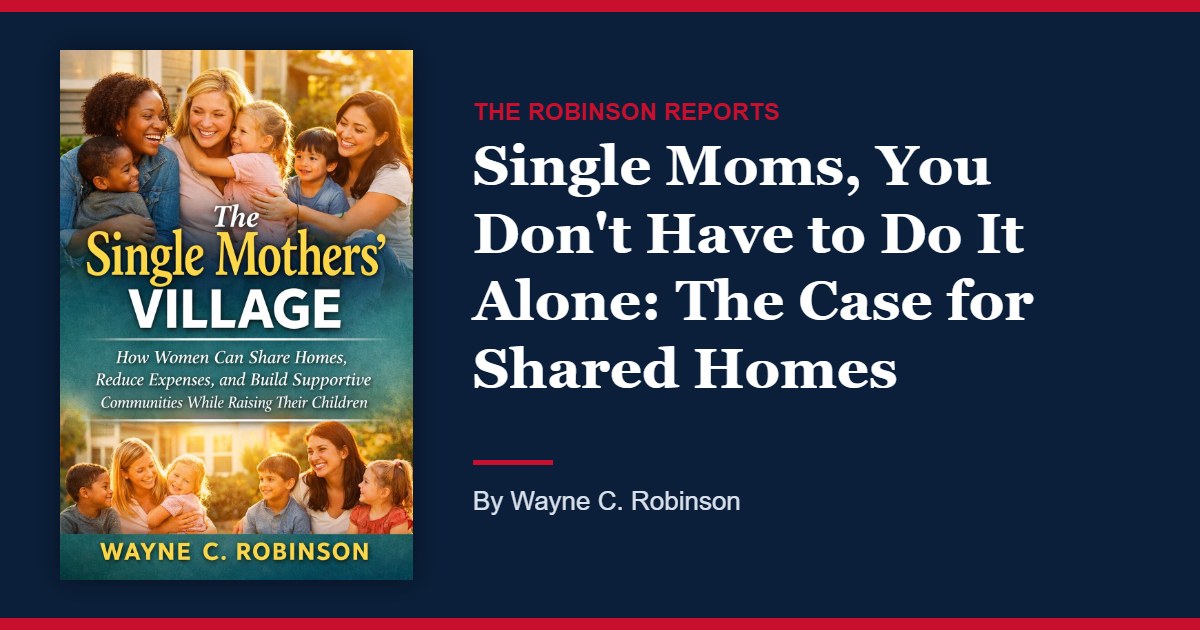
In The Single Mothers’ Village: How Women Can Share Homes, Reduce Expenses, and Build Supportive Communities While Raising Children, Wayne C. Robinson shows you exactly how to find partners, choose a home, and write a household agreement that works. Instant PDF download.