
You polish your resume. You write another cover letter. You click Apply for the fortieth time this month.
Then you wait. And wait. And check your email again.
If the job hunt feels like a game you can’t win, you might be right. Here’s why the system works against you, and how to beat it.
Why the Job Hunt Feels Rigged
A single job posting can pull in hundreds of applications within days. Many never reach a human. Software scans them first and tosses the ones that don’t match the right keywords.
So you twist your resume to copy the job ad word for word. You try to sound like everyone else so you won’t get filtered out. Then you wonder why nobody notices you.
That’s the trap. The job hunt rewards fitting in, not standing out.
The Hidden Cost of Waiting
The job hunt doesn’t just eat your time. It chips away at your confidence.
Interviews are scarce. Offers are scarcer. That scarcity breeds desperation. You check your email every few minutes. You rewrite your resume for the tenth time. You rehearse interview answers until they sound like a robot wrote them.
Then you scroll social media and see old classmates announcing new jobs. Suddenly you feel behind, even if you’re doing everything right.
Worst of all, the stress doesn’t end when you finally get hired. The same habit of waiting for approval follows you into the job. Your raises, your schedule, and your future still sit in someone else’s hands.
Your Value Shouldn’t Depend on a Hiring Manager
In a traditional job search, someone else decides what you’re worth. The recruiter. The algorithm. The boss.
That creates a kind of hunger. You start molding yourself into whatever shape you think they want. Your confidence rises and falls with every email.
Wayne C. Robinson argues that this is backwards. Your value comes from the problems you can solve, not from someone’s approval.
Jobs vs. Opportunities
Here’s the big shift in this book. Stop hunting for jobs. Start spotting opportunities.
A job is a box someone else built. An opportunity is a need you notice and decide to meet.
The book shares examples from around the world. In São Paulo, an underemployed graduate used his language skills to connect tourists with local tour guides. He didn’t wait for a job posting. He saw a gap and filled it.
You don’t need to be a tech genius or an influencer to do this. You just need to look at the world differently.
Opportunities You’re Walking Past
Most people pass dozens of opportunities every day without noticing them. Ask yourself:
- What do people around me keep complaining about?
- What do I already do well that others struggle with?
- Which local businesses look like they need help?
- What skill could I learn in a month that people would pay for?
Every complaint is a clue. Every frustration is a possible paycheck.
How to Get Off the Hamster Wheel
You don’t have to quit your job tomorrow. Start small.
- Pick one problem you can solve for someone this week.
- Build relationships, not just a contact list.
- Offer your help before you ask for a paycheck.
- Cut the distractions that eat your evenings.
- Track every small win and keep going.
Is it riskier to send out a hundred resumes for jobs everyone wants? Or to learn how to create your own options? Once you see it that way, the answer gets clearer.
Pick Yourself
For too long, we’ve been taught to wait to be chosen. Chosen by an employer. Chosen by a hiring manager. Chosen by an algorithm.
You can stop waiting. Pick yourself, start solving problems, and watch how quickly the world starts picking you too.
Get the full playbook
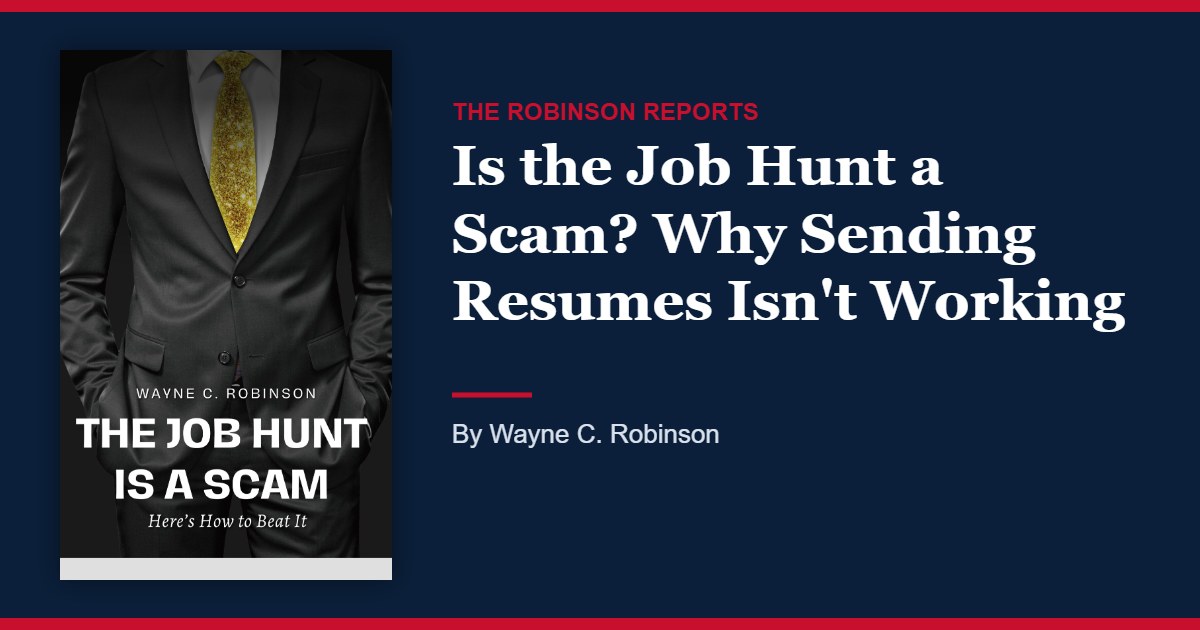
In The Job Hunt Is a Scam: Here’s How to Beat It, Wayne C. Robinson shows you how to stop chasing jobs and start creating opportunities. Instant PDF download.