
A teacher gets arrested. The headlines spread fast. Then the comments start rolling in.
“Where was this teacher when I was in school?” “Lucky kid.” “What’s the big deal?”
Now flip it. Imagine the teacher was a man and the student was a girl. Nobody would call her lucky. Nobody would laugh.
That double standard is the heart of a problem most people would rather not discuss. When women in authority abuse their power, the public often looks away.
Power Is Built on Trust
Think about the people we trust with authority. Teachers guide students. Coaches mentor athletes. Supervisors manage employees. Correctional officers control prison environments.
Every one of those roles comes with power over someone else. That power is supposed to protect. But when it is misused, it can cause deep and lasting harm.
This is not about blaming women in leadership. Most women in authority do their jobs with skill and integrity. This is about the few who cross the line, and the systems that let it happen.
How It Usually Starts
These relationships rarely begin with one big moment. They creep forward in small steps. Each step feels harmless on its own.
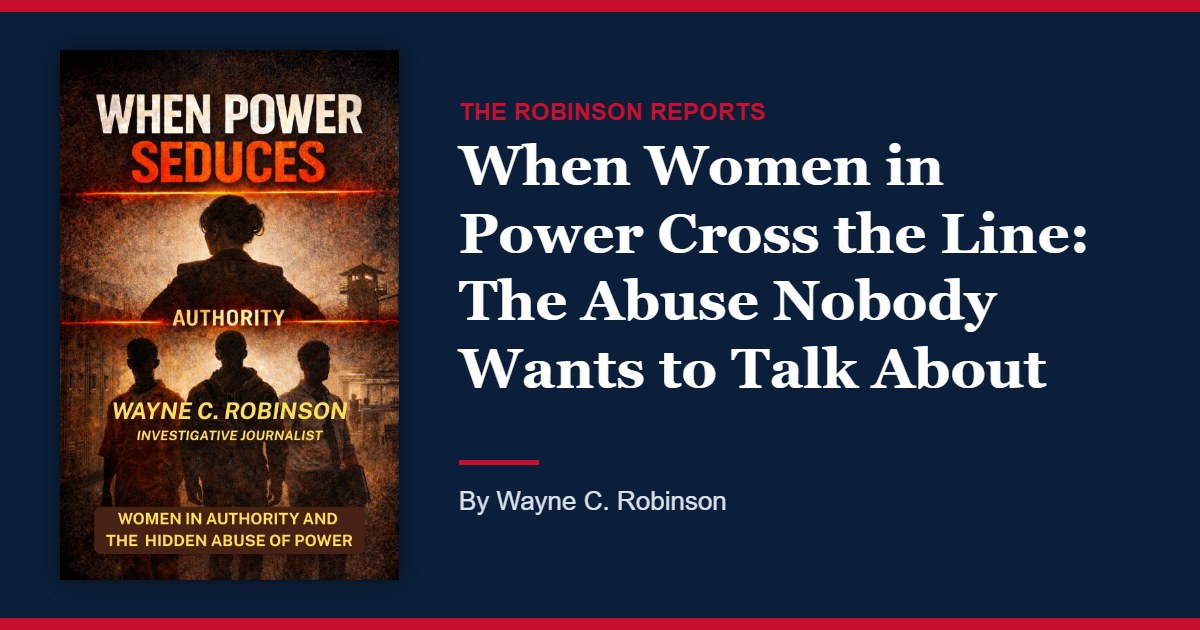
When Power Seduces describes a pattern that shows up again and again:
- Access: the adult finds ways to spend time alone with the young person.
- Special attention: extra praise, gifts, favors, or rides home.
- Emotional bonding: private talks that make the young person feel uniquely understood.
- Secrecy: late-night texts, hidden social media chats, and “this stays between us.”
By the time anyone notices, the professional boundary has been worn away piece by piece.
The Silence Around Male Victims
Boys and young men are often told they should feel proud, not hurt. So many of them stay quiet.
They worry no one will believe them. Or worse, that people will laugh. Some do not even recognize what happened as abuse until years later.
But harm is harm. A young person cannot give real consent to an adult who controls their grades, their freedom, or their future. Age and authority change everything.
Prisons face the same risk in a different form. An inmate depends on officers for almost everything, from meals to phone calls to safety. That makes any “relationship” with staff deeply unequal, no matter who starts it.
The book also looks at why some women in authority cross these lines. Pressure, loneliness at the top, and weak oversight all play a part. None of it is an excuse, but understanding it helps prevent it.
Why Institutions Miss the Signs
Schools, prisons, and workplaces often have rules on paper. The problem is what happens in practice.
Colleagues notice something odd but do not want to accuse a respected coworker. Administrators worry about lawsuits and bad press. And because many people do not see women as likely offenders, warning signs get explained away.
The result? Problems stay hidden until they explode into a scandal.
What You Can Do
Whether you are a parent, a teacher, or a manager, you can help stop this before it starts.
- Watch for any adult who seeks private, unsupervised time with a young person.
- Pay attention to secret messages, gifts, or special favors.
- Talk to your kids about boundaries, and make sure boys hear it too.
- Take every report seriously, no matter the gender of the adult involved.
- Push schools and employers for clear rules and real training.
Open conversations protect kids. Silence protects abusers.
Facing an Uncomfortable Truth
It is easier to treat these cases as jokes or rare oddities. But every case involves a real person whose trust was broken.
If we want safer schools, prisons, and workplaces, we have to apply the same standard to everyone in power. No exceptions. No double standards. That is how real protection begins.
Get the full investigation
In When Power Seduces: Women in Authority and the Hidden Abuse of Power, Wayne C. Robinson examines real cases, how these relationships develop, and what institutions must do to prevent them. Instant PDF download.