
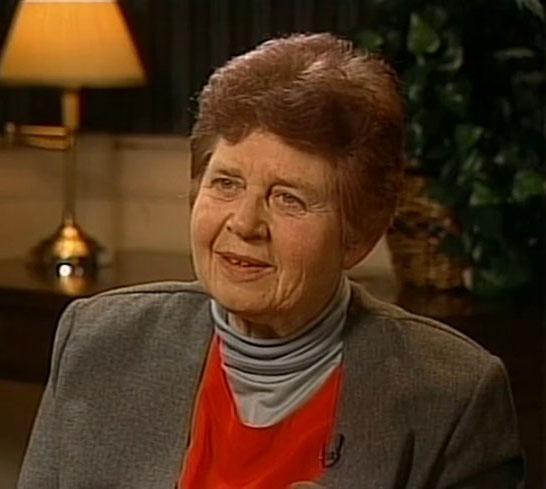
When I first became interested in Dr. Hulda Clark, I quickly discovered that almost everyone seemed to have an opinion about her.
Depending on whom you listened to, she was either a brilliant scientist who challenged conventional medicine or a controversial alternative healer whose theories went far beyond accepted science.
But I wasn’t satisfied with either description.
I wanted to know who Hulda Clark really was.
I didn’t want to write another book that simply repeated what supporters and critics had already said about her. I wanted to understand the woman behind the controversy.
- How did a highly educated scientist become one of the most controversial figures in alternative medicine?
- Why did thousands of people around the world read her books and follow her protocols?
- Why did government authorities investigate her?
- How did she end up being arrested in California and returned to Indiana to stand trial?
- Why did so much of her later work take place across the border in Mexico?
- And perhaps most importantly: Why was this woman considered such a threat?
Those questions led me on an investigation that eventually became The Hulda Clark Story.

I Wanted More Than the Headlines
Dr. Hulda Clark was not an uneducated woman experimenting with ideas she didn’t understand.
She had serious academic credentials.
Clark earned undergraduate and advanced degrees in biology and physiology, including a Ph.D. in physiology. Her scientific interests eventually moved into areas that would become extremely controversial: parasites, environmental pollutants, toxins, electrical frequencies, and their possible relationship to human disease.
And then she made an extraordinary claim.
Clark believed that many diseases—including cancer—could be traced to combinations of parasites, pollutants, and toxins in the body.
She developed methods that she claimed could identify these substances and protocols that she believed could help eliminate them.
Mainstream medicine did not accept many of her conclusions.
But Clark didn’t back down.
- She wrote books.
- She spoke publicly.
- She treated and advised people.
And people began listening.
That is where her scientific story gradually became something else entirely.
It became a story about power, medicine, government, personal freedom, and what happens when someone refuses to stop challenging an established system.
I Interviewed Someone Who Had Been There
One of the most important things I did while researching Clark was speak with her former publicist.
That mattered to me because I didn’t want to understand Hulda Clark only through articles written about her years later.
I wanted to hear from someone who had been close enough to the story to see events unfolding around her.
That conversation helped me look beyond “Dr. Hulda Clark, the controversial healer” and begin looking at Hulda Clark as a person.
- What was happening around her?
- What pressures was she facing?
- Why did she continue despite the criticism?
And how did her life reach the point where authorities were pursuing an elderly woman across state lines over allegations connected with practicing medicine without a license?
Those questions changed the direction of my research.
I realized that the story I wanted to tell wasn’t simply about whether her theories were right or wrong.
The story was what happened to Hulda Clark because she believed those theories were right.
From Scientist to Target
By the 1990s, Clark’s work had attracted the attention of regulatory and law-enforcement authorities.
In Indiana, investigators examined allegations that she had practiced medicine without a license. Clark eventually left Indiana and moved to California.
But the controversy followed her.
Years later, while living in California and working across the border in Mexico, she was arrested and returned to Indiana to face criminal charges.
Think about the extraordinary nature of that situation.
Here was a woman approaching her seventies who had spent much of her life studying science and health. She had written books that were reaching readers around the world.
And now law-enforcement officers had come to California to take her back across the country to stand trial.
Whatever someone thinks about Hulda Clark’s medical theories, that is a remarkable story.
And there was another part that interested me enormously.
She was acquitted.
That raised even more questions for me.
Mexico Didn’t End the Story
Clark’s difficulties in the United States didn’t stop her work.
Much of the next chapter of her story unfolded in Mexico.
While living near the border in California, she crossed into Tijuana, where a clinic associated with her work attracted people searching for alternatives after conventional treatments had disappointed them or, in some cases, left them with little hope.
Some patients made extraordinary claims about their experiences.
Those testimonials do not constitute scientific proof, and Clark’s theories and devices remain highly controversial.
But as an author and investigator, I couldn’t simply ignore the people.
- Why were they traveling to see her?
- Why did some believe so strongly that she had helped them?
- Why did her books continue selling?
- Why did her ideas spread internationally despite the enormous criticism directed at her?
The deeper I went, the less interested I became in giving readers a simple answer.
I wanted readers to see the evidence, understand the controversy, hear the competing arguments, and then decide what they believed.
The Question That Kept Bothering Me
There was one question that followed me throughout this investigation:
What if Hulda Clark had been given the opportunity to have her most controversial ideas rigorously and independently tested?
Perhaps researchers would have proven her wrong.
Perhaps portions of her theories would have survived scientific scrutiny.
Perhaps the answer would have fallen somewhere between those two extremes.
But scientific questions should ultimately be settled by evidence.
That is one reason Clark’s story continues to fascinate me.
Her claims were enormous. Her critics were numerous. Her supporters were passionate. Government authorities pursued her. Patients traveled to Mexico seeking her help. Her books circulated internationally.
And decades later, people are still arguing about her.
This Is the Story I Wanted to Tell

I did not write The Hulda Clark Story because I wanted readers to blindly accept everything Hulda Clark believed.
I wrote it because her life deserves serious examination.
She was a scientist.
She was an author.
She became a controversial alternative-health figure.
She challenged conventional explanations for disease.
She attracted devoted followers and fierce critics.
She faced government investigations and criminal prosecution.
She continued her work in Mexico.
And even after her death, her books, theories, devices, and protocols continue to generate discussion.
That is an extraordinary life.
And the more I investigated it, the more convinced I became that the argument over whether Hulda Clark was a genius or a misguided alternative healer was obscuring something equally fascinating:
the story of Hulda Clark herself.
That is the story I set out to tell.
The Hulda Clark Story asks readers to do something very simple:
Don’t automatically believe her.
Don’t automatically dismiss her.
Read her story. Examine what happened. Ask questions. And decide for yourself.
Other Books By Wayne C. Robinson
- Silenced Healers: The True Story of Suppressed Disease Cures
- The Real MLK
- The USAID Scandal: How Billions Disappeared
- USAID And Child Trafficking
- America On The Brink: The Looking Bankruptcy That Could End The U.S. Empire
- How the Democratic Party is Destroying Itself: And Americans Are Paying The Price