
It starts with a friendly message. “Hey sis, long time no see! Got a minute? I have an opportunity for you.”
Next thing you know, you are at a hotel ballroom or a Zoom call. Everyone is smiling. Someone flashes a screenshot of a five-figure deposit. You hear words like freedom, blessing, and breakthrough.
Then comes the starter kit. And the monthly order. And the pressure to recruit everyone you know.
If that sounds familiar, you are not alone. Multi-level marketing has found a powerful target in Black communities, here and around the world.
Why MLMs Love Our Communities
MLMs do not pick communities at random. They look for three things: trust, hustle, and hope. Black communities have all three in abundance.
We have a long tradition of side hustles. Bake sales, braiding shops, barbershops, and shea butter tables at summer festivals. Making a dollar out of fifteen cents is in our DNA.
We also have tight networks. Church families, sororities, family reunions, and group chats. MLM recruiters know a message from a cousin or a choir member carries more weight than any ad.
And we have hope. When jobs are shaky and wages are flat, a promise of being your own boss sounds like a way out.
The Church Connection
Church is more than worship. It is a support system, and recruiters know it.
Some host “financial breakthrough” seminars in the fellowship hall. Others mix sales pitches with prayer. A pastor’s blessing, real or implied, can become part of the pitch.
Here is a warning sign worth remembering. When business talk starts sounding like scripture, slow down. Words like blessing and prosperity should not be sales tools.
The Numbers They Don’t Show You
Recruiters love to show the winners. They rarely show the math.
The Federal Trade Commission warns that most people who join MLMs make little or no money. Some studies put the share who lose money at over 99 percent.
Why? Because in most MLMs, the real money comes from recruiting, not selling. The people at the top earn from everyone below them. The people at the bottom pay for kits, inventory, events, and travel.
Then the hidden costs pile up:
- Savings spent on products nobody buys
- Credit card debt from “investing in your business”
- Friends who stop answering your calls
- Family tension at holidays and reunions
- Shame that keeps people quiet when they quit
It’s Not You. It’s the System.
If you joined an MLM and lost money, you did not fail. The system was designed so most people would.
That is one of the most important messages in this book. Many people blame themselves. They think they did not work hard enough or pray hard enough. The truth is that the model is stacked against you from day one.
Knowing that frees you to stop chasing the next “opportunity” and start building something real.
How to Break Free and Build Real Success
The good news? The same drive that MLMs exploit can build real wealth when you point it in the right direction.
Instead of recruiting your friends, you can build skills that people actually pay for. Instead of buying inventory, you can start a service business with almost no money down. Instead of going it alone, you can team up with people you trust and share the work.
Before you say yes to any opportunity, ask yourself a few honest questions. Who buys this product if not other members? Can I see real income numbers? What happens if I stop recruiting?
If the answers make you uneasy, trust that feeling. Your time, your money, and your relationships are worth protecting. Your hustle deserves better.
Get the full story
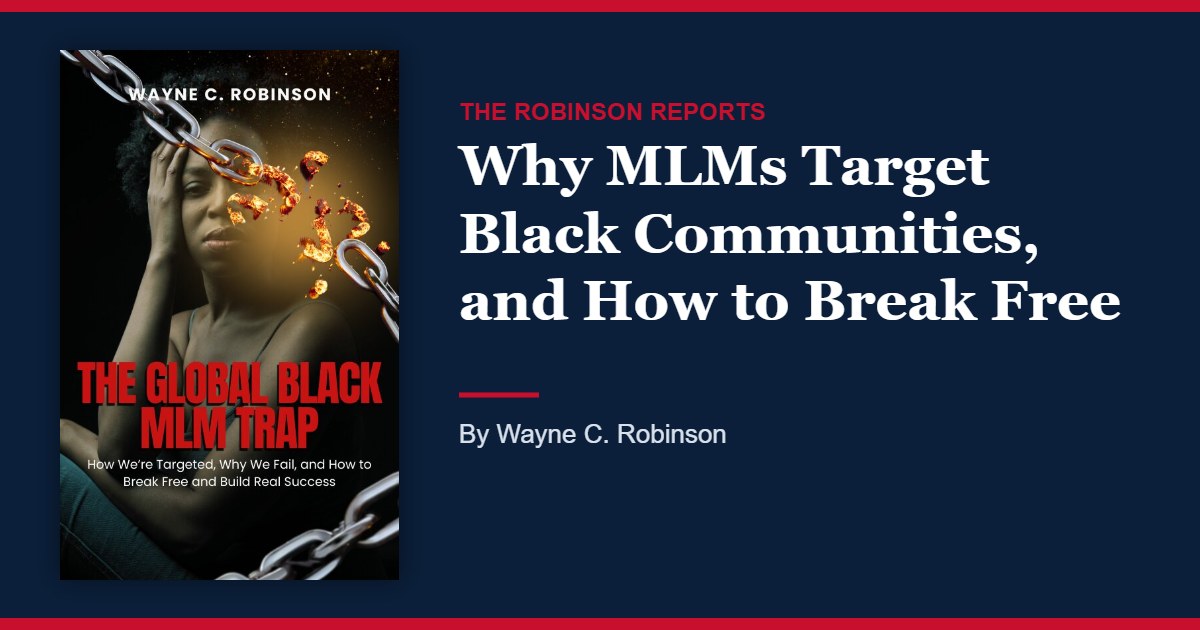
In The Global Black MLM Trap: How We’re Targeted, Why We Fail, and How to Break Free and Build Real Success, Wayne C. Robinson shows how MLMs target Black communities worldwide, and how to build real income instead. Instant PDF download.